

By Wendy Edelberg
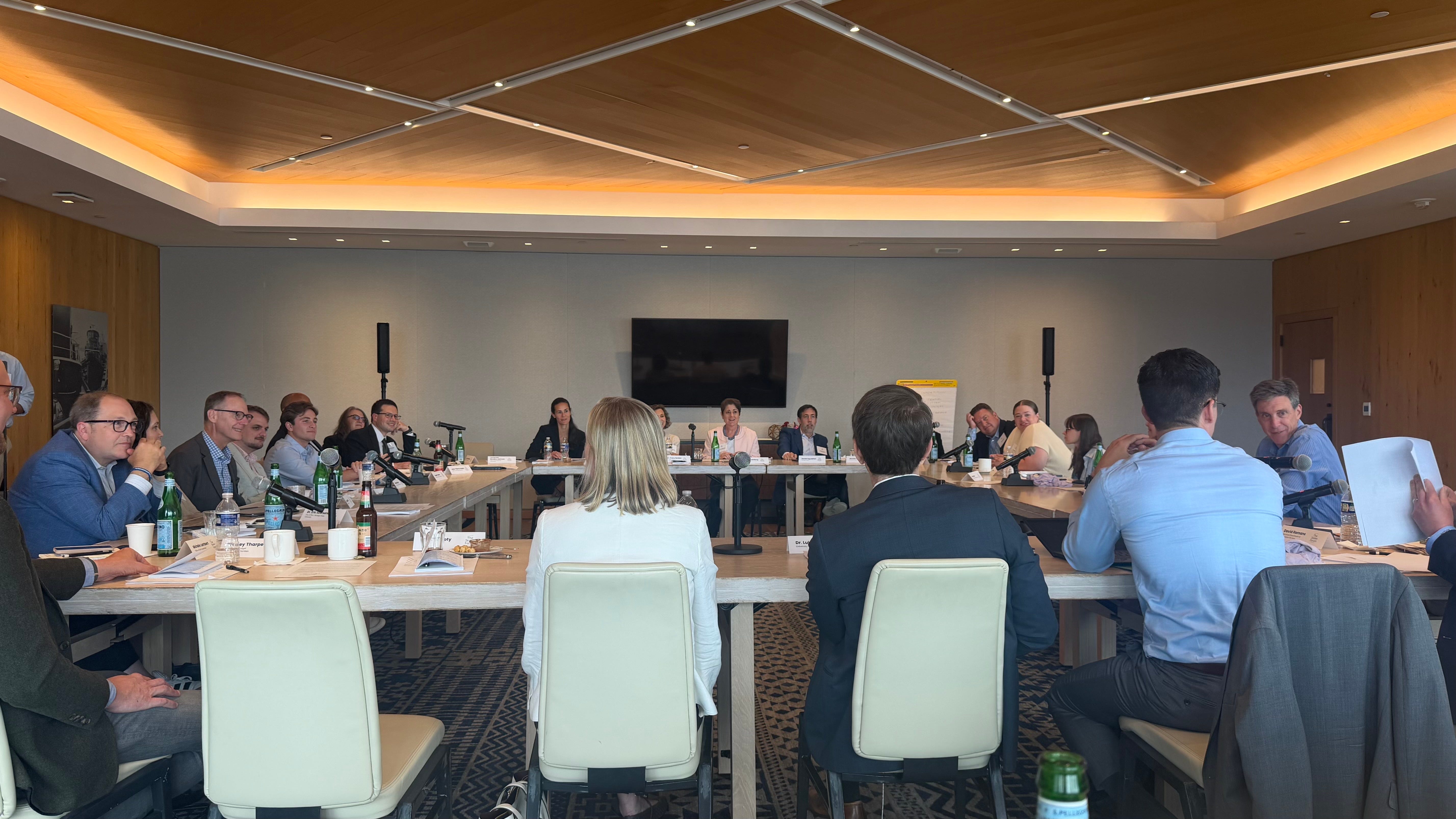
Last week, The States Forum held its third policy accelerator in Baltimore. The goal as always was to bring together people with different perspectives to craft actionable ideas that policymakers can use to address challenges they face today. This accelerator was focused on a challenge that nearly every state in the nation is confronting – how to improve economic growth in the face of an increasingly volatile fiscal environment.
The question we asked is: what can states do?
The answer, it turns out, is a lot.
In fact, states can do more than merely meet the challenges of today: Policymakers can use this moment to make state government work more effectively and efficiently for its residents, and do more to maximize opportunity.
States face tough budget challenges: rising health care costs, aging populations, infrastructure needs, volatile revenue sources, and structural changes in the economy. And federal policy is an additional hurdle, as tax changes are forcing states to decide whether to conform, decouple, or redesign parts of their tax codes while reductions in federal transfers are putting pressure on programs where states and the federal government share costs. To be successful, policymakers need credible information, practical tools, and policy ideas that are adaptable.
We brought together state budget officials, fiscal analysts, tax experts, public finance practitioners, and researchers from across the political spectrum to identify real options for state policymakers. The goal was not consensus but to generate ideas, test them from different perspectives, and clarify the tradeoffs.
What emerged from these conversations were a host of interesting and provocative ideas that require more work and development over the coming months, along with a set of actionable solutions that state policymakers could implement now, to:
Close tax gaps. All states fail to collect all the tax revenue they are owed, but almost none of them know the scope of what they are missing, let alone how best to minimize these gaps. Investments in technology, data analytics and data matching, coordination among states for audits of national businesses, simplified filing, and taxpayer service can help states collect taxes already owed while reducing unnecessary burdens on households and businesses.
Build a tax code for the 21st century. State tax codes were built for an economy fueled by tangible goods, brick-and-mortar storefronts, and geographically rooted workers and businesses. Today’s economy is shaped increasingly by services, digital commerce, remote work, and mobile capital. States can strengthen their revenue systems by making them more flexible and broadening the tax base to include taxation of services and digital commerce.
Develop a clear strategy around conforming to or decoupling from federal policy. Federal tax changes can flow automatically into state tax codes, sometimes reducing state revenue or creating complexity without an intentional state decision. Conformity can reduce compliance costs, but federal tax policy is not designed around state budgets. States need clearer strategies for when to conform to the federal tax code, when to decouple their tax code from it, and when to pause before adopting federal changes.
Increase resiliency. States should develop budgeting strategies for state programs that account for changes in the level of federal support, especially reductions; one approach is bulking up rainy day funds.
Regularly examine tax expenditures. Many tax expenditures – including deductions and credits – continue indefinitely even as they increasingly fail to support the initial policy goal they were designed to address. Instead, every tax break should include a sunset date so it can be regularly reviewed for effectiveness. And tax breaks targeted to groups with a range of incomes, such as seniors, should be means-tested.
Implement a state property tax to boost homebuilding at the local level. States should consider taxing property at the state level and transferring some of that revenue to localities that successfully upzone and otherwise allow for more home building.
Think long term. Every state should publish a forecast of both revenues and expenditures with a long enough horizon to capture structural trends in demographics, business activity and the like. That change would encourage bold, evidence-based policymaking while also supporting fiscal responsibility. A forecast does not eliminate uncertainty, but it makes uncertainty visible. Effective state government depends on public information that makes expected challenges and tradeoffs visible: what current trends and choices are likely to mean for state economies and budgets, what opportunities and risks those choices create, and how they will affect the state’s capacity to meet future obligations. Not surprisingly, polling by The States Forum found that the majorities of voters in both parties felt a 10-year budget forecast would make them more confident that state leaders are making responsible long-term decisions.
Be clearer about long term costs and benefits of policy proposals. Fiscal notes - the estimates that show the costs and savings of proposed policies - should show budgetary effects over a long enough horizon that the costs and benefits of proposals are captured. Moreover, for major proposals – which are often defended or criticized on the grounds that they will affect jobs, investment, wages, productivity, migration, or business formation – states should have a structured way to test those claims. If policymakers are considering bold changes to public investments in infrastructure, workforce training, transit, research, education, and the like, fiscal notes should show the effects of those policies on the economy and labor force.
The accelerator did not produce a single blueprint, and it was not designed to. States differ too much for one fiscal strategy to fit them all: their economies are different, their priorities are different, and their fiscal risks are different. A state with an economy dependent on energy production faces different questions than a state dependent on tourism. The goal was to create specific, actionable tools and policy options that states can adapt to their own circumstances.
But the discussion did point toward a common agenda: States need tax systems that fit the modern economy. They need stronger administration. They need clearer strategies for managing federal tax changes. And they need new tools: long-term forecasts, stress tests, better fiscal notes, and a disciplined way to evaluate economic claims. Those tools make visible the costs and benefits inherent in significant fiscal policy changes.
Changes such as these are not simply about managing states’ fiscal health, although they will certainly help to accomplish that. How states tax, what they tax, how they spend, and what they spend on shape the opportunities available to their residents. What are often thought of as obscure, technical management tools, the province of bureaucratic experts toiling away in basement offices in state capitals, are in fact key tools that state governments deploy that have major impacts on the economy, on the services people receive, and on the choices they have available to them.
Making government more efficient and more transparent is fundamental for democracy. When the expected consequences of policy choices are public, citizens can better understand what their leaders are doing, why those choices matter, and when the results are worth the investment of state resources. They are able to hold their elected representatives to account for what they have promised, and what they have delivered.
The current budget environment is volatile, but that does not mean states cannot act or plan. States are where the most important governing choices happen. Flexible, well-managed budgeting is the epitome of effective government. With these ideas, policymakers will have tools that allow states to respond to immediate fiscal pressure while building the capacity to invest, adapt and flourish over the long term.
Wendy Edelberg is a Senior Fellow at the States Forum and a Non-resident Senior Fellow at the Brookings Institution. Previously, she was director of The Hamilton Project and before that Chief Economist at the Congressional Budget Office.